Valorant Climb From Lowest To Highest Rank
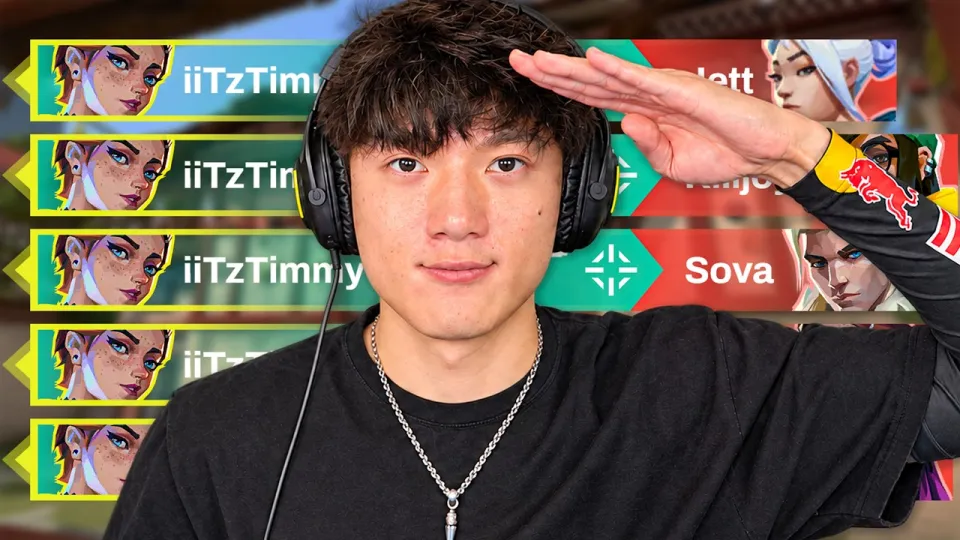
Video: I Might Be Getting TOO Good at Valorant… (Lowest To Highest Rank Challenge)
Need articles like this for your video? They help promote it on YouTube and Google — order them in the Telegram bot @sat_sit_bot. Articles with your video embedded are written and posted by the bot itself — on popular topical sites (no ads). Your first 50 articles are free.
· based on the channel iiTzTimmy Two
Valorant is Riot Games' free-to-play 5v5 tactical shooter where two teams of five fight over a spike, and rank is the number that decides who you meet on the ladder. The lowest-to-highest-rank challenge is a simple premise: take a fresh account near the bottom of the ranked ladder and grind upward toward Radiant, the game's top tier. In the iiTzTimmy Two video "I Might Be Getting TOO Good at Valorant… (Lowest To Highest Rank Challenge)", that premise turns into a study of how low-elo lobbies actually break down — and you can follow the live version of the climb on iiTzTimmy's Twitch channel.
How the Valorant lowest-to-highest rank challenge works
The format is a ranked ladder run, not a tournament: one player, a fresh account, and a long sequence of matches that should end as close to Radiant as the clock allows. Valorant's competitive ladder runs from Iron through Bronze, Silver, Gold, Platinum, Diamond, Ascendant, Immortal and finally Radiant, and each tier is split into three divisions except Radiant itself, which is a live leaderboard rather than a fixed division.
A few practical rules shape every run like this:
- The account starts unranked, so the first handful of placement matches set the visible starting point.
- Ranked rating moves unevenly — a win streak produces bigger gains, and personal performance matters more in the early matches of a new account.
- Matchmaking pulls opponents from a hidden skill rating, so a strong player climbs fast at first and then slows down as the lobbies catch up.
- Radiant requires both a high Immortal rating and a spot inside the regional leaderboard, which is why the last stretch of any climb is the hardest.
The interesting part is not the destination. It is the middle: the games where a mechanically superior player has to survive teammates who do not communicate, opponents who over-commit, and the temptation to play down to the lobby.
What low-elo Valorant lobbies reveal about mentality
The most instructive moment in the run is not a clutch — it is a Cypher player in the first match who becomes the definition of bad mental. Viewers pick up on it immediately: he is first onto site, dies, and then blames the team; he nitpicks every call his teammates make and invents comms that were never said, including a call about a cage that apparently only existed in his head.
That behaviour is a compact lesson in why players stay stuck. A few patterns repeat in almost every low-rank lobby:
- Entry without follow-up. Being first onto site is only useful if the team is ready to trade; going alone and dying is not aggression, it is a donation.
- Blame as a substitute for review. Calling out teammates feels productive and costs nothing, which is exactly why it replaces actual adjustment.
- Imagined information. Mishearing or inventing a call creates a fight with a teammate over something that never happened, and the round is already lost.
- Tilt compounding. One bad round turns into a bad half, and a bad half turns into a lost match that had nothing to do with aim.
A viewer's summary lands the point: if a player is that tilted about not hearing comms, a break from the game would help more than another queue. The higher-ranked player in the lobby, meanwhile, keeps the same routine regardless of what teammates do — which is the actual difference between the two accounts.
Aim, movement and the small mechanical edges
Mechanical skill in Valorant is a floor, not a ceiling, and the run shows where the floor sits. The player's aim is clearly above the lobby, but the highlights viewers single out are not raw flicks — they are movement decisions: a quick peek over an obstacle, a fake AFK that buys a free angle, a flick that catches only a sliver of a target and still connects.
Three mechanical habits separate a climbing player from a stuck one:
- Crosshair placement over reaction speed. Pre-aiming the angle a defender will hold removes the need for a fast flick at all.
- Peek discipline. Wide-swinging every corner works against opponents who cannot punish it and stops working two ranks later, so building the correct habit early matters.
- Utility timing. Smokes, cages and recon tools are worth more when they land with the team's push than when they are thrown to feel useful.
There is also the hardware question that shows up in every chat: high, stable frame rates make tracking and spray control noticeably easier, and a smooth 500 fps setup is a real advantage in a game where a single frame can decide a duel. It is not the reason a player is stuck in Silver, but it is a reason the same player feels more consistent on a better machine.
Rank inflation, smurfs and the fair-play question
A lowest-to-highest-rank run always raises the same argument: is a high-ranked player on a low account ruining games for everyone else? The honest answer is that the format sits in a grey zone. Riot's rules prohibit buying, sharing and deliberately manipulating accounts to farm easier opponents, and a well-known streamer doing a public climb is a different case from an anonymous smurf — but the nine other people in the lobby experience something similar either way.
What keeps the format watchable is transparency. The account is visible, the matches are streamed live, and the point is the climb rather than easy highlights. Viewers also notice the flip side: opponents in the second match are visibly desperate to take down a famous name, and that extra motivation makes the games harder, not easier. Some lobbies treat the streamer as a trophy, which is the opposite of the free-win fantasy smurfing is supposed to provide.
For anyone trying the same climb at home, the takeaway is narrower. You do not need a new account to fix a stuck rank; you need the habits that survive a rank reset — consistent crosshair placement, calls that match reality, and a mental reset after every lost round.
Common questions about climbing the Valorant ladder
Most doubts around this challenge come from the same handful of places, and they are worth answering directly rather than through vague advice.
- Why does a strong player still lose games in low elo? Because five players decide a round, and no amount of individual aim fixes a team that enters separately and never trades.
- How long does an Iron-to-Radiant climb take? It depends on win rate and how quickly the hidden rating catches up; the early tiers move fast, while the Immortal-to-Radiant stretch can take far longer than everything below it combined.
- Does a new account climb faster? Early matches on a fresh account award more rating per win, so the first tiers pass quickly — the slowdown arrives once the matchmaking system has enough data.
- Is the challenge worth copying? As practice, yes, if the goal is learning to adapt to unpredictable teammates; as an excuse to stomp beginners, no.
Useful links
The full stream and the live version of the climb are on Twitch, and the rest of the creator's output is split across platforms:
- Watch iiTzTimmy live on Twitch
- https://www.youtube.com/c/iiTzTimmy
- https://www.youtube.com/channel/UCQldhsqGcoJuyqU-26cvcjQ
- https://www.youtube.com/channel/UCRjsH98Vs3B-2QgFEFArE9A
- https://www.youtube.com/channel/UCSQqxSoBS2RXTxSefnc1jXA
- https://twitter.com/iiTzTimmy
- https://www.instagram.com/iiTzTimmy/
- https://www.tiktok.com/@iiTzTimmy
- https://discord.gg/iitztimmy
Final thoughts on the climb
The lowest-to-highest-rank run is entertaining because it exposes the gap between mechanical skill and competitive discipline, and the Cypher who blames his team is a better teaching tool than any highlight reel. The climb itself is a reminder that Valorant ranks reward consistency: correct peeks, honest comms and a short memory after a lost round. If you want to see how far the run actually gets, the live matches continue on Twitch, where the next games are played out in real time. This breakdown was put together around the iiTzTimmy Two channel, which published the challenge video and hosts the shorter-form cut of the grind.
Key takeaways
- The challenge format: start on a fresh low-ranked account and climb toward Radiant, the top Valorant rank.
- iiTzTimmy Two published the run on 27.09.2026, with the full stream available on Twitch.
- Low-elo games are decided less by aim than by comms, tilt and basic site discipline.
- A Cypher player in the first match becomes the case study for blaming teammates instead of fixing mistakes.
- Mechanical skill alone does not carry a climb: patience and mental reset matter more than flick speed.
Source: I Might Be Getting TOO Good at Valorant… (Lowest To Highest Rank Challenge) · Markdown version
Questions & answers
What is the lowest-to-highest-rank challenge in Valorant?
It is a ranked climb format where a player starts on a fresh account near the bottom of the ladder and tries to reach Radiant, the top tier. The run is played across many matches rather than a single session, and the visible rank rises as the account's hidden rating catches up.
Why do strong players sometimes lose in low-rank Valorant lobbies?
Rounds are decided by five players, so individual aim cannot fix a team that enters separately and never trades kills. Tilt, invented comms and blaming teammates compound the problem far more than poor mechanics do.
Does a new account make climbing to Radiant faster?
The first tiers pass quickly because a fresh account gains more rating per win while the system gathers data. The slowdown comes later, and the Immortal-to-Radiant stretch usually takes longer than everything below it combined.
Is smurfing in Valorant against the rules?
Riot prohibits buying, sharing and deliberately manipulating accounts to farm easier opponents. A public, transparent climb by a known creator is a different case from an anonymous smurf, but the opponents in those lobbies still face a much stronger player.